Friday, February 13, 2015

A Sweet Lesson on Weathering

This week, we learned that weathering is the breaking down or wearing away of a rock.  We've read about how water, wind, ice, and plants can weather rocks.  Today we started testing how forces cause rocks to wear away with peppermints, sand, and jars.

 First each group gently shook their jar for 1 minute,


made observations,


 and recorded their observations with pictures or words.  We repeated this procedure 3 times, then did it again with another peppermint, but this time shook vigorously.


 From left to right: our control (a peppermint that wasn't shaken), a gently shaken peppermint (see the small chip at the top?), and a vigorously shaken peppermint (see how a bigger piece broke off at the top?).

 Most students also noticed a change in color as the stripes wore off.


Check out this crack after some vigorous shaking!


On Tuesday,  we'll debrief this activity to discuss the relationship between strength of forces and effect on rocks/Earth's crust.

Monday, February 9, 2015

Types of Lines

We're continuing to observe properties (attributes) of geometric figures, and this week, we're on the lookout for parallel, intersecting, and perpendicular lines.  Not sure what to look for?  Check out this Study Jam on Types of Lines.

 https://blogger.googleusercontent.com/img/b/R29vZ2xl/AVvXsEgnAbspauKP4Csz6a9RNXh2C88BAihe2oRU-Gf2B7PeoLTGWYg3QW8ABvHWsSI3mTgZ_oOIWKpl3vBrMzCa5pKh471hdgByV3hw_xfvTv30bIFAKAU-VMhe2GMGWKut5RPA_7SmPHByAjuR/s1600/geometry.png

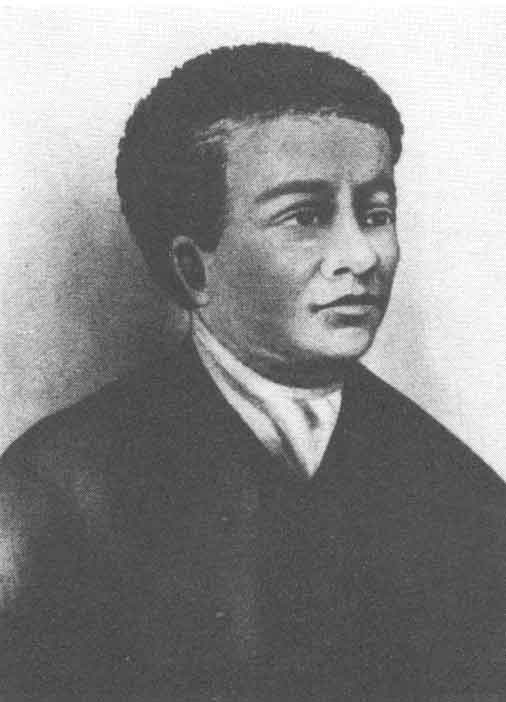
Celebrating Black History Month

*Sometimes* I miss teaching Social Studies.  I love a good story, so I enjoy learning about peoples' lives.

https://blogatfellowship.files.wordpress.com/2012/02/benjamin_banneker.jpg

Benjamin Banneker was born on November 9, 1731 in Ellicott City, Maryland.  Benjamin's parents were former slaves, but he was born free and raised on a tobacco farm where he attended school.  However, Benjamin learned science mostly through teaching himself.  He worked most of his life as a farmer, but he was also a successful problem-solver.  When Banneker was 24, he studied how clocks work by taking apart a watch, reassembling it, and making his own clock from wood.  He taught himself astronomy (the study of the moon and stars), and published a popular almanac (a book published every year that contains facts about the movements of the sun and moon, changes in the ocean's tides), Benjamin Banneker's Almanac, from 1792 to 1797.

Also a mathematician, Benjamin surveyed (made maps) of the land that was to become Washington, D.C.  Benjamin worked on calculating the precise measurement of meters.

Benjamin exchanged letters with Thomas Jefferson about slavery and how blacks were just as intelligent as whites. 


Benjamin never married; much of his personal life is now a mystery, as his papers and belongings were destroyed in a fire that occurred on the day of his funeral.

http://cdn.blackenterprise.com/wp-content/blogs.dir/1/files/2010/06/0623_banneker2.jpg
 I am looking forward to reading this book!

http://d.gr-assets.com/books/1348944650l/163269.jpg

Friday, February 6, 2015

Classifying Quadrilaterals

This week, we started our geometry unit.  We've been learning attributes/properties of polygons to help us describe and identify these shapes.  We've looked at side length (line segments) and angles (right, acute, obtuse), and today we reviewed parallel and intersecting to help us describe lines and line segments.  Students were also introduced to perpendicular lines and line segments, or lines that intersect, forming right angles.  These new attributes/properties are extremely useful in describing and identifying the big family of quadrilaterals.

http://ritterreview.weebly.com/uploads/5/7/7/8/5778915/6003545.jpg?172
Here's a Study Jam to review what we learned today.
 

http://bridges1.mathlearningcenter.org/files/images/blog_images/QuadrilateralVideo.png 

https://s-media-cache-ak0.pinimg.com/originals/28/05/d3/2805d3bbe2dae69f0140ab523ceae752.jpg

Wednesday, February 4, 2015

Classifying Triangles

We've been observing properties of polygons, and today we classified triangles by properties such as side length and angles.

http://www.scholastic.com/teachers/sites/default/files/promo_images/meta_page/studyjams-classify-triangles.jpg

Here's a great Study Jam to review what we discussed in class today!

Tuesday, February 3, 2015

Fourth Grade ROCKS!

In Science this week, we're investigating how rocks are formed and classified.

Check out these Study Jams:

http://upload.wikimedia.org/wikipedia/commons/a/a9/Igneous_rock_eng_text.jpg


http://tle.westone.wa.gov.au/content/file/ea6e15c5-fe5e-78a3-fd79-83474fe5d808/1/hum_bio_Science_3a.zip/content/007_evidence_evolution/images/pic024.jpg
http://www.travelphotoadventures.com/wp-content/uploads/2013/01/The-Beautiful-Grand-Canyon-by-Michael-Matti.jpg 
 The Grand Canyon, Arizona


I wish there was a Study Jam about metamorphic rocks.  Maybe one day!  :-) 

Monday, February 2, 2015

Happy 100th Day!

Today we celebrated 100 days of learning in fourth grade.  During Math Centers, all of our multi-digit multiplication and division problems included multiples of 100.  We've been using expanded multiplication and division algorithms: 


During our Core Lesson, we made decimal designs on hundredths grids, then used fractions and decimals to describe the color for part of the design.


My favorite activity to celebrate our 100th Day was the 100 meter dash.  We collected data about how fast we can run 100 m, then used our knowledge of place value to compare our data to our classmates' data.


Fourth Graders--how many days have you really been in school?  Consider you've been in school since kindergarten, and there are 180 days each school year.  Submit evidence of your solution tomorrow for Chief Cash.  :-)