Monday, February 9, 2015

Celebrating Black History Month

*Sometimes* I miss teaching Social Studies.  I love a good story, so I enjoy learning about peoples' lives.

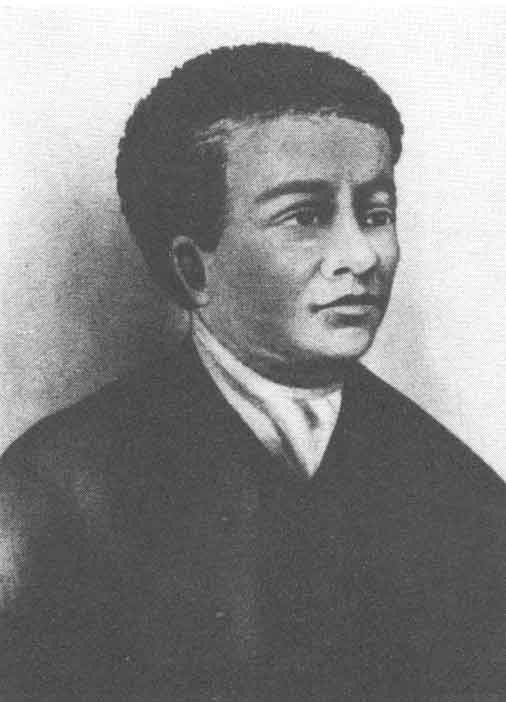
https://blogatfellowship.files.wordpress.com/2012/02/benjamin_banneker.jpg

Benjamin Banneker was born on November 9, 1731 in Ellicott City, Maryland.  Benjamin's parents were former slaves, but he was born free and raised on a tobacco farm where he attended school.  However, Benjamin learned science mostly through teaching himself.  He worked most of his life as a farmer, but he was also a successful problem-solver.  When Banneker was 24, he studied how clocks work by taking apart a watch, reassembling it, and making his own clock from wood.  He taught himself astronomy (the study of the moon and stars), and published a popular almanac (a book published every year that contains facts about the movements of the sun and moon, changes in the ocean's tides), Benjamin Banneker's Almanac, from 1792 to 1797.

Also a mathematician, Benjamin surveyed (made maps) of the land that was to become Washington, D.C.  Benjamin worked on calculating the precise measurement of meters.

Benjamin exchanged letters with Thomas Jefferson about slavery and how blacks were just as intelligent as whites. 


Benjamin never married; much of his personal life is now a mystery, as his papers and belongings were destroyed in a fire that occurred on the day of his funeral.

http://cdn.blackenterprise.com/wp-content/blogs.dir/1/files/2010/06/0623_banneker2.jpg
 I am looking forward to reading this book!

http://d.gr-assets.com/books/1348944650l/163269.jpg

Friday, February 6, 2015

Classifying Quadrilaterals

This week, we started our geometry unit.  We've been learning attributes/properties of polygons to help us describe and identify these shapes.  We've looked at side length (line segments) and angles (right, acute, obtuse), and today we reviewed parallel and intersecting to help us describe lines and line segments.  Students were also introduced to perpendicular lines and line segments, or lines that intersect, forming right angles.  These new attributes/properties are extremely useful in describing and identifying the big family of quadrilaterals.

http://ritterreview.weebly.com/uploads/5/7/7/8/5778915/6003545.jpg?172
Here's a Study Jam to review what we learned today.
 

http://bridges1.mathlearningcenter.org/files/images/blog_images/QuadrilateralVideo.png 

https://s-media-cache-ak0.pinimg.com/originals/28/05/d3/2805d3bbe2dae69f0140ab523ceae752.jpg

Wednesday, February 4, 2015

Classifying Triangles

We've been observing properties of polygons, and today we classified triangles by properties such as side length and angles.

http://www.scholastic.com/teachers/sites/default/files/promo_images/meta_page/studyjams-classify-triangles.jpg

Here's a great Study Jam to review what we discussed in class today!

Tuesday, February 3, 2015

Fourth Grade ROCKS!

In Science this week, we're investigating how rocks are formed and classified.

Check out these Study Jams:

http://upload.wikimedia.org/wikipedia/commons/a/a9/Igneous_rock_eng_text.jpg


http://tle.westone.wa.gov.au/content/file/ea6e15c5-fe5e-78a3-fd79-83474fe5d808/1/hum_bio_Science_3a.zip/content/007_evidence_evolution/images/pic024.jpg
http://www.travelphotoadventures.com/wp-content/uploads/2013/01/The-Beautiful-Grand-Canyon-by-Michael-Matti.jpg 
 The Grand Canyon, Arizona


I wish there was a Study Jam about metamorphic rocks.  Maybe one day!  :-) 

Monday, February 2, 2015

Happy 100th Day!

Today we celebrated 100 days of learning in fourth grade.  During Math Centers, all of our multi-digit multiplication and division problems included multiples of 100.  We've been using expanded multiplication and division algorithms: 


During our Core Lesson, we made decimal designs on hundredths grids, then used fractions and decimals to describe the color for part of the design.


My favorite activity to celebrate our 100th Day was the 100 meter dash.  We collected data about how fast we can run 100 m, then used our knowledge of place value to compare our data to our classmates' data.


Fourth Graders--how many days have you really been in school?  Consider you've been in school since kindergarten, and there are 180 days each school year.  Submit evidence of your solution tomorrow for Chief Cash.  :-)

Friday, January 30, 2015

Diamonds


During our study of minerals this week, one of our classmates asked what natural diamonds look like before they are cut and polished.

2008_11_14_Diamonds5.jpg 
Diamond "in the rough", uncut and unpolished

Another student asked if gems are valuable.  Diamonds are rare and difficult to mine (take from the earth), which makes them expensive and valuable.
 Diamond Mine Map


Photo via: Pictures Collection
Mirny Diamond Mine, Russia

Photo via: Rare Delights Magazine 
Inside Mirny Diamond Mine
 
Now that we know what minerals are, how to identify them by their properties, and that rocks are made of minerals, next week we'll dig deeper into how rocks are formed and classified.

Thursday, January 22, 2015

Decimals

Fractions and Decimals
 Great visual!  HTU = Hundreds, Tens, Units (Ones) . t = tenths.  
We'll continue with h for hundredths.

This week, students have been learning to represent parts of a whole as decimals.  Fourth grade problem-solvers will:
  • Use decimal notation for fractions with denominators of 10 or 100.  For example, rewrite 0.62 as 62/100; describe a length as 0.62 meters; locate 0.62 on a number line diagram.
  • Compare two decimals to hundredths by reasoning about their size.  Recognize that comparisons are valid only when two decimals refer to the same whole.  Record the results of comparisons with the symbols >, =, <, and justify conclusions, e.g., by using a visual model.